Veterans Day Activities for the Classroom: History, the Tomb of the Unknown Soldier, and 10 Meaningful Ideas
Why is Veterans Day on November 11, and how do you celebrate it in the classroom?
The short answer: Veterans Day is November 11 because World War I fighting ended at the 11th hour of the 11th day of the 11th month in 1918. To celebrate it in grades 5 to 8, teach that history, introduce the Tomb of the Unknown Soldier, and then let students honor veterans through letters, guest speakers, a moment of silence, and hands-on reading activities.
Table of Contents
Every November, students get a day off school or a quick announcement over the loudspeaker, and many of them never learn why. Why November 11? Why at 11 o’clock? And who exactly are we honoring?
Veterans Day is one of the best chances all year to connect history to real people in your students’ lives. Many of them have a parent, grandparent, neighbor, or coach who served. When students understand the story behind the day, the thank-you notes and moments of silence start to mean something.
In this post, you’ll find a kid-friendly history of Veterans Day, the story of the Tomb of the Unknown Soldier, and 10 meaningful activities for grades 5 to 8 that you can use this week.
Why Is Veterans Day on November 11?
Veterans Day falls on November 11 because that’s the day the fighting in World War I stopped. According to the U.S. Department of Veterans Affairs, an armistice, or agreement to stop fighting, went into effect “on the eleventh hour of the eleventh day of the eleventh month” of 1918 (VA). The war didn’t officially end until the Treaty of Versailles was signed on June 28, 1919, but November 11 became the day people remembered.
Here’s how Armistice Day became the Veterans Day we know today:
| Year | What happened |
|---|---|
| 1918 | World War I fighting stops at 11 a.m. on November 11. |
| 1919 | President Woodrow Wilson proclaims November 11 the first Armistice Day. |
| 1938 | Congress makes Armistice Day a legal holiday. |
| 1954 | After World War II and the Korean War, Congress replaces the word “Armistice” with “Veterans” so the day honors veterans of all wars. |
| 1971 | A new law moves the holiday to a Monday, and it’s observed on October 25. |
| 1978 | Veterans Day returns to November 11, where it has stayed ever since. |
A quick spelling tip for students: The VA says the correct spelling is Veterans Day, with no apostrophe (VA). The day doesn’t belong to veterans. It’s a day for honoring them.
What’s the difference between Veterans Day and Memorial Day?
Students mix these up all the time. The VA explains that Memorial Day honors military members who died in service, while Veterans Day thanks and honors all who served, and is “largely intended to thank LIVING veterans for their service” (VA). An easy way to remember it: Memorial Day is for remembering, and Veterans Day is for thanking.
What Is the Tomb of the Unknown Soldier?
The Tomb of the Unknown Soldier at Arlington National Cemetery in Virginia honors American service members who died in war and could never be identified. It’s one of the most powerful symbols to share with students on Veterans Day, because it connects directly to that first November 11.
Here are the facts students find most fascinating, all from Arlington National Cemetery:
- It began on Armistice Day. An unknown soldier from World War I was buried there on November 11, 1921.
- The inscription is unforgettable. It reads: “Here rests in honored glory an American soldier known but to God.”
- It is never left alone. Since 1937, guards have stood watch over the Tomb at all times, day and night, in every kind of weather.
- The guards come from “The Old Guard.” Soldiers of the 3rd U.S. Infantry Regiment, the Army’s official ceremonial unit, guard the Tomb.
- The number 21 is everywhere. A guard marches 21 steps, pauses for 21 seconds, turns, and repeats. The number stands for the 21-gun salute, the highest military honor.
- Unknowns from other wars rest there too. Unknown service members from World War II and the Korean War were buried beside the first in 1958.
- One unknown was later identified. The Vietnam War Unknown was buried in 1984, but DNA testing in 1998 identified him as Air Force 1st Lt. Michael Joseph Blassie. The crypt now honors all missing service members from the Vietnam War.
Classroom connection: Show students a short video of the Changing of the Guard, then ask, “Why would a country guard a grave every minute of every day?” It’s a powerful discussion starter.
10 Meaningful Veterans Day Activities for Grades 5–8
These activities work for middle school classrooms and homeschools alike. Mix and match them to fit one class period or a full week.
- Hold a moment of silence at 11:00 a.m. Explain why 11 o’clock matters before the moment begins. When students know the history, the silence feels powerful instead of awkward.
- Run Veterans Day Cube Stations. Students read a nonfiction passage about the history of Veterans Day, World War I, Remembrance Day, Woodrow Wilson, Arlington National Cemetery, and the Tomb of the Unknown Soldier. Then they rotate through six stations, cracking 4-digit codes with fill-in-the-blank, true or false, multiple choice, and main idea activities. Each station earns a piece of a cube that students color, assemble, and hang as a Veterans Day display. It includes an answer key, so it doubles as an easy sub plan. (See the Veterans Day Cube Stations here.)
- Write thank-you letters. Students write letters or cards to veterans. Contact a local veterans’ organization or VA medical center ahead of time to arrange delivery, or have students write to a veteran in their own family.
- Invite a veteran to speak. A parent, grandparent, or community member who served can bring history to life. Have students prepare respectful questions in advance, like “What do you wish people knew about serving?”
- Interview a veteran at home. Students record a short interview with a family member or neighbor who served and share one thing they learned. This works especially well for homeschool families.
- Build a Wall of Honor. Students bring a name and photo of a veteran they know. Post them with the person’s branch and years of service.
- Read “In Flanders Fields.” Read John McCrae’s 1915 World War I poem aloud, then explain why poppies became a symbol of remembrance. Connect it to Remembrance Day, which countries like Canada and the United Kingdom observe on November 11.
- Explore the Tomb of the Unknown Soldier. Watch the Changing of the Guard, then have students write a short reflection on the inscription, “known but to God.” Older students can research the Vietnam Unknown who was identified through DNA.
- Sort Veterans Day vs. Memorial Day. Give students a stack of statements and have them sort which holiday each describes. It’s a quick, active way to clear up a common mix-up.
- Research the branches of service. Assign small groups the Army, Navy, Air Force, Marine Corps, Coast Guard, and Space Force. Each group creates a fact card to share with the class.
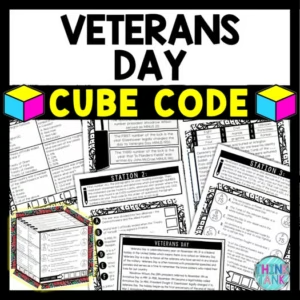
READY-TO-GO VETERANS DAY LESSON
Veterans Day Cube Stations
A nonfiction passage, six self-checking stations, a cube display students build themselves, and a full answer key. Great for grades 5 to 8 and easy sub plans.
See It on TpTHow Do You Teach Veterans Day Respectfully?
Veterans Day is a celebration, but it can also stir up strong feelings. A few simple guidelines keep the day meaningful for everyone.
- Know your students. Some students may have a parent who is deployed, or a family member who was injured or died in service. Give them a heads-up and a choice about how much to share.
- Focus on service, not just battles. Talk about what veterans did and gave up, not only about combat.
- Teach the difference from Memorial Day. Veterans Day is a day to thank the living, so keep the tone grateful and positive.
- Let students lead the thank-yous. Letters, questions, and reflections in their own words mean more than a scripted assembly.
- Connect it to history. When students learn why November 11 matters, the day stops being just a day off school.
Frequently Asked Questions
Why is Veterans Day on November 11?
Veterans Day is on November 11 because World War I fighting stopped at 11 a.m. on November 11, 1918, when an armistice went into effect. The day was first called Armistice Day and was renamed Veterans Day in 1954 to honor veterans of all wars.
What is the difference between Veterans Day and Memorial Day?
Memorial Day honors military members who died while serving their country. Veterans Day honors everyone who served, and especially thanks living veterans for their service.
How do you explain Veterans Day to middle school students?
Start with the story of the armistice at the 11th hour of the 11th day of the 11th month. Then connect it to real people, like veterans in students’ own families, and give students a way to say thank you through letters, interviews, or a moment of silence.
What is the Tomb of the Unknown Soldier?
The Tomb of the Unknown Soldier at Arlington National Cemetery honors American service members who died in war and were never identified. The first Unknown Soldier, from World War I, was buried there on November 11, 1921, and guards have watched over the Tomb at all times since 1937.
Why do Tomb guards take 21 steps?
Guards at the Tomb of the Unknown Soldier march 21 steps and pause for 21 seconds because the number 21 stands for the 21-gun salute, the highest military honor.
Is it “Veterans Day” or “Veteran’s Day”?
The correct spelling is Veterans Day, with no apostrophe, according to the U.S. Department of Veterans Affairs. An easy way to remember it: the day is for honoring veterans, not a day that belongs to them.
What are good Veterans Day activities for grades 5 to 8?
Good Veterans Day activities for grades 5 to 8 include a moment of silence at 11 a.m., thank-you letters, veteran interviews or guest speakers, reading “In Flanders Fields,” and reading comprehension stations about the history of Veterans Day and the Tomb of the Unknown Soldier.
Conclusion
Veterans Day is more than a date on the calendar. When students understand why the guns fell silent at 11 o’clock, why a soldier “known but to God” is guarded every minute of every day, and why the veterans in their own lives deserve a thank-you, the day becomes something they’ll remember.
If you want a ready-to-go lesson that teaches the history and keeps students moving, the Veterans Day Cube Stations walk students through it all with six hands-on stations and a finished cube display.
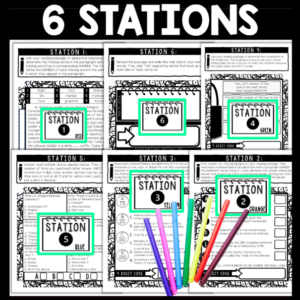
Get the Veterans Day Cube Stations
Sources
- U.S. Department of Veterans Affairs. History of Veterans Day.
- U.S. Department of Veterans Affairs. Veterans Day Facts and Information.
- Arlington National Cemetery. Tomb of the Unknown Soldier.